andrea's blog


We had a conversation with Fransien van de Putt about our artistic work, dream logic and what agency it lends us and the article is published in the Theaterkrant magazine:

TUSSEN DANS EN DROOM

Het werk van Andrea Božić en Julia Willms

by Fransien van der Putt


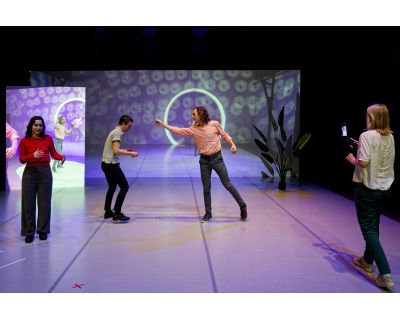
De voorstellingen en installaties van Andrea Božić en Julia Willms beogen een immersieve ervaring, maar de constructie van die ervaring wordt ook blootgelegd. Op zoek naar interpretaties van hun ensceneringen, voel je je als publiek haast een detective. ‘Voor ons is het een heel interessante vraag: waar begint kunst en waar eindigt die?’

Choreografie wordt al heel lang breder opgevat dan iets dat met getrainde dansers op een podium gebeurt. De dada-wandeling uit 1921 is een mooi voorbeeld van hoe in de kunst het herorganiseren van de ervaring van tijd en ruimte ook een politiek aspect krijgt: welke uitwisseling en transformatie van gebaren komt eigenlijk in aanmerking om als kunst getoond te worden? Kan een avondje met liedjes en verhalen of een wandeling door de stad langs drukke kruispunten en druilerige parken net zo goed choreografisch worden opgevat?

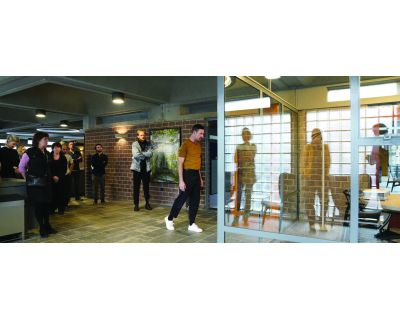
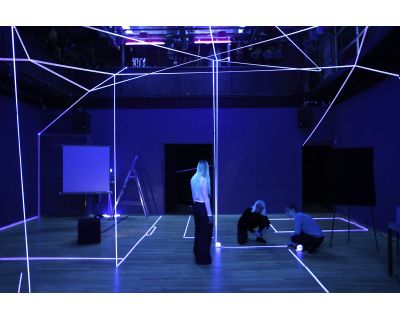
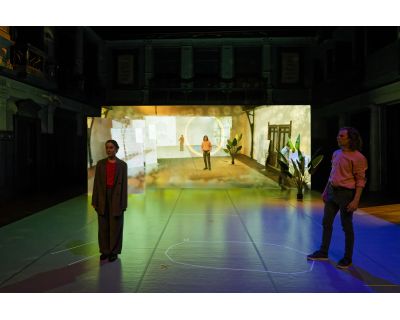
In verschillende voorstellingen gaan ook Andrea Božić en Julia Willms met hun publiek aan de wandel. Letterlijk nemen ze het mee door een gebouw, zoals in PoroCity gebeurde in het ontruimde Burgerweeshuis van Aldo van Eyck in Amsterdam-Zuid. Maar meestal zijn het denkbeeldige wandelingen, en ook wel klauterpartijen, wanneer ze de toeschouwers op sleeptouw nemen door de wisselende constructies van een alsmaar transformerend landschap op de vloer van het theater. Uitzichten en beschrijvingen van die uitzichten spelen daarin een grote rol. Waar ben ik eigenlijk, en waar kijk ik naar? Het zijn vragen die niet alleen de toeschouwers, maar ook de performers zich hardop stellen.

In zijn publicatie uit 1965, Dancers, Buildings and People in the Streets, beschrijft de New Yorkse dichter en criticus Edwin Denby hoe dans en stedelijkheid met elkaar verweven zijn. In zijn tijd in New York is de dialoog met beeldend kunstenaars doorslaggevend voor de conceptuele ontwikkeling van de choreografie. Maar choreografen en danskunstenaars als Merce Cunningham, Trisha Brown of Meredith Monk bouwden voort op de emancipatie van de dans tot zelfstandige kunstvorm die al in Europa was begonnen met Diagilevs Ballet Russes en Bauhaus, waarbij de choreografie zich in dialoog met beeldend kunstenaars losrukte van de invuloefening voor het operaballet.

Tien jaar geleden legde dramaturg Nienke Scholts in TM nog eens uit wat de betekenis is van ‘hybride kunstvormen’ voor de ontwikkeling van het hedendaagse theater. Net als in de jaren zestig, gaat het volgens Scholts, die onder andere naar het werk van Andrea Božić en Julia Willms verwijst, niet alleen om het ter discussie stellen of openbreken van genres en tradities binnen de kunst, maar ook om het opzoeken van de randen van de kunst zelf. ‘Toeschouwers en critici vragen zich bij deze projecten niet zelden hardop af of het nog wel theater is, of überhaupt kunst.’ Volgens Scholts gaat het niet om het scheppen van nieuwe vormen (gesprekken, tentoonstellingen, spellen) an sich, maar om de vraag ‘welke nieuwe omgevingen en situaties ze met die vormen creëren.’ Daarmee breiden ze niet alleen de begrippen theater en kunst uit, maar ook potentieel ons begrip van de wereld.

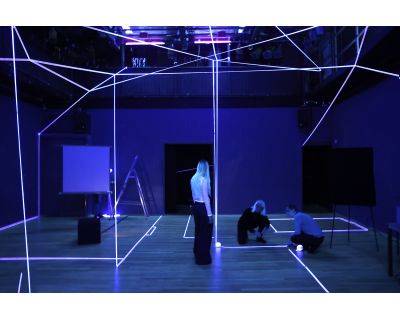
Andrea Božić en Julia Willms maakten hun eerste werk samen in 2005. Pulse Line is een video met twee buiken die tegen elkaar aan, op en neer bewegen. Een intiem statement, dat formeel wordt gebracht. Het lichamelijke is af te zien aan de huid.  De video is duidelijk horizontaal opgenomen, maar door het beeld te kantelen, zoomt het in op een verticale plooi tussen iets dat nog maar net herkenbaar is als twee buiken. De afgelopen twintig jaar maakten de twee vele voorstellingen samen met geluidskunstenaar Robert Pravda, en recentelijk met performancekunstenaar Billy Mullaney onder de naam Tilt, zoals After Trio A (2010), PoroCity (2018) How To Exit A Reality (Attempt 1 of 19) (2019) en Within Cells Interlinked (2024), naast installaties als The Cube (2015-2022), Civil Twilight (Choreography for 450 nm and 600 nm) (2022) en Zandloper (Hourglass) (2019). 

Hoe komen we tot onze oriëntatie in de wereld? Welke gebaren helpen daarbij? Vaak laten Božić en Willms zien dat een kleine verandering van de setting alle verhoudingen overhoop kan gooien en het onderscheid tussen fictie en realiteit heel makkelijk kan worden ondermijnd. De voorstellingen en installaties beogen een immersieve ervaring, maar de constructie van die ervaring wordt ook blootgelegd. De laatste tien jaar speelt de logica van de droom een grote rol.

Waarom zijn deze droomconstructies zo interessant voor jullie als makers?
Božić: ‘Dromen hebben hun eigen logica, ze zijn gelaagde beelden die vaak een paradox bevatten. In een droom kijk je bijvoorbeeld naar jezelf. Of je bent aan het wegrennen, maar ook de achtervolger. Je herkent een vriend, al ziet hij er totaal anders uit. Je hebt seks met een jaguar, naast je moeder die ligt te slapen, en tegelijk ben je bang voor die jaguar. Hoe meer je inzoomt en de droom belichaamt, hoe meer er van die lagen zichtbaar worden.’

Willms: ‘Dromen lijken onsamenhangend, alsof elk deel een totaal ander verhaal vertelt. Maar wanneer je ze naast elkaar zet, zie je ook een onderliggend patroon, dat een bepaalde paradox zich in verschillende beelden herhaalt.’

Božić: ‘Dromen bestaan uit episodes die een soort kettingstructuur hebben, dat is heel choreografisch, net als de elementen die steeds op een andere manier terugkomen.’

Er zit een frictie tussen de manier waarop de droom wordt verwoord en hoe die kan worden belichaamd.
Božić: ‘Het gaat ons om het ensceneren van die dubbelheid, een kloof tussen de verbeelding en belichaming, zodat er een andere vorm van aanwezigheid tot stand kan komen.’

Willms: ‘Droombeelden zijn nooit enkelvoudig, simpel. Ze zitten vol tegenstrijdigheden, lagen, verschillende gevoelens.’

En dat is zonder de dramatische eenheid van een stabiele protagonist, die alles verbindt?
Božić: ’De dromer is altijd de protagonist. Hij bevindt zich in al die situaties. Het publiek volgt natuurlijk de performer, als een stand-in-dromer, maar we projecteren ook op hen. We zeggen bijvoorbeeld: mijn hele familie is hier, of dit is een gymzaal vol turners met precies die kapsels. Het zijn gebaren om het publiek uit te nodigen om met ons mee te spelen in deze fictie — wat het wezen van theater is natuurlijk.’

‘Dromen zijn een geïnternaliseerd cultureel archief, zoals Gloria Wekker het noemt. We benaderen dromen als documentair materiaal en combineren dat met speculatieve fictie. We willen het publiek in een staat brengen, een manier van kijken laten aannemen waarbij het meerdere logica’s tegelijk kan waarnemen; dus niet dat je heen en weer schakelt, of multitaskt. Je blijft als het ware in de ruimte. Het is voor de toeschouwer niet alleen een conceptuele ervaring, maar ook een perceptuele ervaring.’

Willms: ‘Het is een uitnodiging om jezelf onder te dompelen in het mechanisme en tegelijkertijd naar de werking van dat mechanisme te kijken, hoe het is geconstrueerd, en vooral ook dat als je de constructie verandert alles mee verandert, ook hoe jij erin aanwezig bent.’

‘We zitten altijd al in een gelaagde ruimte, een politieke ruimte, een sociale ruimte, een historische ruimte, een private ruimte. Maar we denken daar niet altijd over na, we zijn het ons niet bewust, of het doet er niet toe voor ons. Als we de ruimte op die niveaus gaan lezen, dan realiseer je je dat we altijd worden beïnvloed door meerdere realiteiten tegelijkertijd.’ 

Het gaat om verschillende regimes, perspectieven, stemmingen die elkaar tegenspreken?
Božić: ‘Ja, we hoeven er alleen de nadruk op te leggen, het is niet dat we de boel bij elkaar verzinnen.’

Wat me ook opvalt is dat dramaturgie en choreografie hier haast samenvallen. Julie choreograferen de beweging van perspectieven en kaders. Vaak lijkt de theatervloer op een installatie, of een filmset, alleen ontbreken de camera’s.

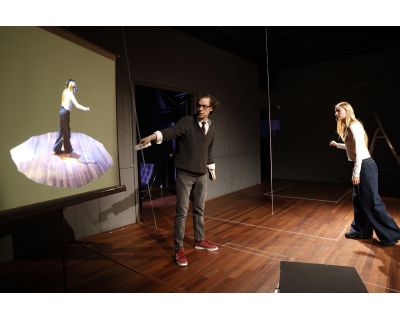
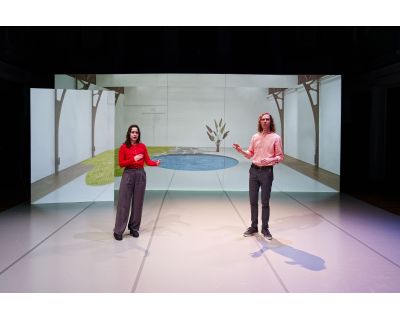
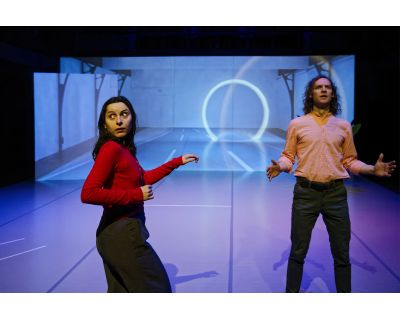
Willms: ‘We combineren de logica van verschillende media en de manieren van kijken die daarbij horen, zoals een filmset binnen een live performance in het theater, of een videoprojectie die de architectuur van de ruimte verlengt. We werken met de apparatus van de theaterruimte of een tentoonstelling, als integraal onderdeel van het werk.’

Božić: ‘Voor ons is het een heel interessante vraag: waar begint kunst en waar eindigt die? Gelden er verschillende regels voor het kijken naar kunst en het kijken naar de wereld? Wat als we die grens schrappen? Ben ik een consument die de narratieven volgt? Of kan ik zeggen: wat als… ’

Willms: ‘… wat als er geen ruimte buiten bestaat, als we allemaal binnen zijn? Het is speculatieve fictie.’

Božić: ‘Dramaturgie en choreografie liggen heel dicht bij elkaar, ze hebben iets constructiefs, ik zou niet weten hoe ik ze moet onderscheiden. Voor ons is het idee van een performatieve setup essentieel. Het gaat erom hoe je een bepaald punt van interesse, of een vraag, vertaalt naar een materiële situatie, waarbij het publiek kan observeren hoe de vraag zich in de tijd ontwikkelt, dus hoe de paradoxen zich in de tijd ontvouwen. En dan duwen en trekken we er nog wat aan.’

Dit gaat over toeschouwerschap. Emilie Gallier noemt dat ‘the implicated spectator’, de medeplichtige toeschouwer. Het is een paradoxaal voorstel. Je wordt als publiek betrokken, maar op andere momenten kijk je naar een constructie, een object of een apparaat. Michele Rizzo sprak hierover in een eerder interview met Theaterkrant. ‘Waarom kunnen we dit niet in het theater doen?’ vroeg hij. ‘In het museum vinden we het heel normaal dat we ons niet met alles identificeren. We kijken ook naar kunst als objecten.’

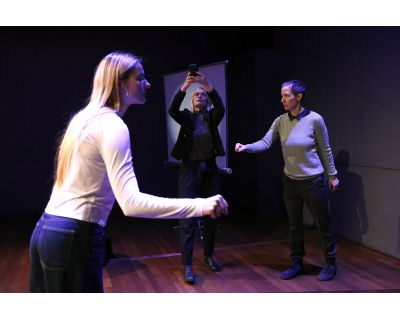
Božić: ‘Ja, we gebruiken afstand en reflectie, maar we plaatsen je er ook middenin. Je bevindt je midden in de ruimte en de ruimte beweegt, en dan beweeg jij mee. Op het ene moment kijk je van buitenaf, in de volgende stap ben je volledig ondergedompeld. Maar dan kijkt een andere toeschouwer naar jou – van buitenaf – en dat weet je, dus het is een soort vermenigvuldiging, om het waarnemingsbereik van het werk uit te breiden.’

Wat is er zo fascinerend aan het confronteren van het publiek met dit spel van meta en immersie?
Willms: ‘Het handelingsvermogen.’

Hoezo, kun je deze perceptie trainen? En wat heeft dat met het handelingsvermogen van de toeschouwer te maken?
Božić: ‘Het gaat niet om het trainen, maar gewoon om het erkennen dat we dit toch al doen. We praten alsof het allemaal keurig gescheiden is, maar we bevinden ons voortdurend in meerdere perspectieven, ook op privégebied: misschien ben je moeder, maar je bent ook kind. Je bent docent, maar je studeert ook, je bent baas hier en werknemer ergens anders. We voeren voortdurend een rol uit naar de buitenwereld omdat we getraind zijn om als een vaste identiteit op te treden en niet te veranderen, alsof we alleen maar wat ouder worden. Dat is volgens mij pas echt een fictie. We willen dat idee van onszelf als vaste, maar vervagende objecten ongedaan maken. Wij zien dat we altijd sowieso meervoudig zijn, niet op een abstracte manier, maar dat we in vele conflicterende perspectieven zitten, ook met onszelf.’

We hebben het dus voortdurend over anders-zijn, migratie en meervoudigheid?
Božić: ‘We horen elkaar niet eens, omdat we zo onze eigen meningen hebben. Dat bracht ons bij de dromen, omdat dromen daar vol van zijn, een cultureel archief. In onze dromen internaliseren we onze identiteitskenmerken in alle tegenstrijdigheid. We praten over vluchtelingen of over migranten die onze banen innemen als een realiteit. Maar dat zijn ficties, ongegrond, en toch worden ze voor ons geplaatst. Het is een keuze om die ficties op die manier te plaatsen: een politiek spel. Wij kunnen deze spellen zichtbaar maken, niet om te onderwijzen en te zeggen ‘kijk hoe slecht het is’, want iedereen ziet dat het slecht is, maar we doen er toch aan mee. Wij zijn geïnteresseerd in wat ons een gevoel van handelend vermogen zou geven, om iets te veranderen, zelfs op kleine schaal. Het is belangrijk dat we niet alleen overweldigd worden door de wereldproblemen, dat ze ons blokkeren.’

Willms: ‘We hebben al meervoudige identiteiten, wat we zijn is allemaal geconstrueerd. Als je dat ziet, dat identiteit constant verschuift, verandert en transformeert, dan kun je ook zelf veranderen en of nieuwe realiteiten in het leven roepen.’

Tijdens jullie voorstellingen ontstaat er door de afstand, de speculatie en het uitzoeken van alle interpretaties ook een bepaalde lol, alsof je als toeschouwer een soort Sherlock Holmes wordt.
Božić: ‘Het is soms ook een beetje creepy. Dromen serieus nemen en belichamen in het hier en nu, is in zichzelf een absurdistisch en humoristisch voorstel, maar we nemen het serieus. Dat is precies de onderzoekende blik waar we toe uitnodigen, de gameplay met het publiek. Het is heel georganiseerd en geconstrueerd op het podium. Maar toch moet je als kijker veel verbindingen leggen. Het kan heel leuk zijn om dat te doen, om dat te oefenen, maar voor ons is het geen vrijblijvende hobby. Voor ons gaat het over hoe je je tot de wereld verhoudt, en niet op een therapeutische manier. Voor ons is het echt een politieke en artistieke vraag: hoe gaan we in relatie tot de wereld staan? Worden deze narratieven simpelweg op ons geprojecteerd, of hebben we een eigen handelingsvermogen?’


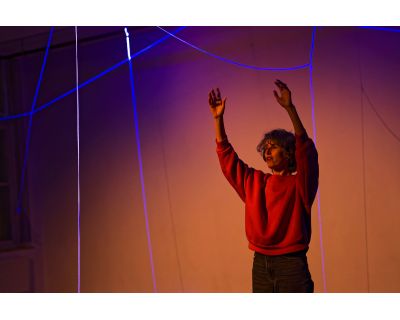
PoroCity by Andrea Bozic and Julia Willms

© photo by Thomas Lenden


LISTEN TO THE PODCAST HERE


17.12.2025 / þ thorns þ

Episode Sixteen: Andrea Božić, Julia Willms and Victoria Pérez Royo

Rose Choreographic School | Sadlers Wells

We are very happy to be part of the  þ thorns þ podcast series Dreaming Communities. The series is curated by Victoria Pérez Royo and hosts invited artists who work with ‘dreaming substance.’ Here the adjective “dreaming” does not refer solely to nighttime sleep, but serves as an umbrella term for a whole series of images that have been conceived in a fragmentary and scattered way in various disciplines and practices: memories, anticipations, daydreams and night dreams, ghosts and specters, visions, and hallucinations, among others.

This episode is a conversation between Victoria Pérez Royo, curator of the series, choreographer and artist Andrea Božić and visual artist Julia Willms. They discuss research on dreams, dream logic, and the immersive virtual environments that dreams create. Andrea and Julia have collaborated since 2003, making interdisciplinary works that reorganise space, attention and perception, exploring how spectatorship, imagination, and spectacle are intertwined and embodied.

Together, they explore the nature and practice of capturing and interpreting dreams. They discuss research on dreams, dream logic, and the immersive virtual environments that dreams create.

Read HERE a text about the Dreaming Communities series, written by Victoria Perez Royo

*

To the Glossary Andrea donates Specufiction and Transduction 
Julia donates Dream Mapping and Malleability 
Victoria donates Dreaming Substance and Somatic Dreaming 

Find out more about Andrea, Julia and Victoria on our People page.

This series is produced and edited by Hester Cant. The series is curated by Victoria Pérez Royo with additional concept and direction by Martin Hargreaves and Izzy Galbraith.

*

About the podcast series by Rose Choreographic School | Sadlers Wells London

We propose a postdisciplinary approach to the question of the choreographic and engage with artists from all practices and inclinations for whom the concept of the choreographic is a central concern. Our podcast series þ thorns þ, which can be found on our Publications page, invites a wider community of artists to speculate on pedagogy and the choreographic.

You can listen wherever you access your podcasts, or through this website, where we host a transcript and links to resources mentioned.


About Rose Choreographic School

Spectra | Salons are back! In-disciplinary evenings across performance and visual art hosted by TILT at our studio and at the Salon of Marci Panis in Amsterdam.

Salon 1 — What Is the Stuff Dreams Are Made Of?
8 November 2025, 18.00 hrs

Salon 2 — The Agony and the Ecstasy of American Football as Enthusiastically Explained by Billy Mullaney
16 November 2025, 17.00 hrs

Salon 3 — The Premonitions Agency: Open Doors
13 December 2025, 19.30 hrs

Full programe and more information - here

Excited to announce Dream Archive: Live Collection on 

16 October 2025, 11.15 hrs at the Society 5.0 Festival, Amsterdam, in collaboration with the Centre of Expertise Just City HvA

Dream Archive: Live Collection is a performative dream collecting session. This government-funded initiative aims to collect citizens' dreams and analyze them to predict possible future scenarios and affect outside events. We are excited to collaborate with the Premonitions Agency for it as part of the development of the LUNARIS world.

Presented by Andrea Božić, Billy Mullaney and Julia Willms

Dreamer: Zahra Mohseni
Dream date: 7 June 2024
Dream title: Fur coat
Place of dreaming: Amsterdam, my room


Academy of Theatre and Dance, Amsterdam
22 September - 3 October 2025

Excited to announce already the third edition of the TILT artistic research lab with DAS Theatre students and the iDLab team. Departing from the LUNARIS artistic questions, we explore tools and practice developing transmedia performative set ups that combine the physical, digital and imaginary into a continuum, looking at what modes of spectatorship and agency arise from that. How to materialise dream and quantum spacetime logic? What tools and perspectives can a specufictional gameplay give us in dealing with the world?

Facilitators: Andrea Božić, Billy Mullaney, Julia Willms with DAS Theatre students and iDLab team; TILT intern: Angela Stipić

We are very excited to open the new season with a new iteration of our performance in collaboration with the moon: join us for the End of the Eclipse featuring a total lunar eclipse aligning with a super full moon on 7 September 2025.

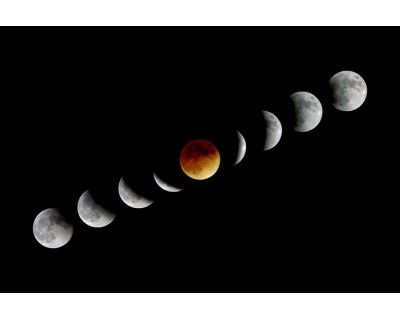
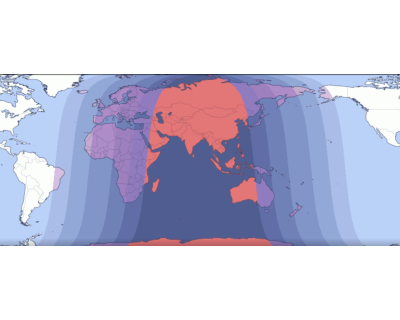
For this dance, the moon, the earth and the sun align in a straight line just after sunset on Sunday 7 September performing a total eclipse of the Super Blood Moon. The moon comes to its closest approach to the earth. The earth passes between the sun and the moon casting its shadow over the moon, temporarily disrupting the coming of the light and turning it blood orange.

End of the Eclipse is a slow-motion immersive durational spectacle visible to the naked eye simultaneously to viewers in Africa, Asia, Australia and Europe.

For those in Europe, where we are based, the moon will rise already fully eclipsed in the east around sunset. It will appear large close to the horizon and start slowly opening back to the full moon as the skies darken.

End of the Eclipse is a ritual of endings and beginnings, darkness and illumination. This eclipse brings completion, closure and revelations, ‘things are likely to come to an end or change form around this time’. The good and bad deeds one does are multiplied tenfold. The full moon energy is available three days before and three days after the event.

Take a moment to revel in the dark: 7 September 2025

Performance times for Europe:
 
Sunday, 7 September 2025

20:10 Moon rises fully eclipsed. You can spot it close to the eastern horizon.
20.11 Maximum eclipse, moon is orange
20:52 End of the totality. The first sunlights reach the moon, partial eclipse.
21:57 End of the eclipse
 
Local times vary.
For the precise schedule, more information on your viewing location and a teaser click here

Entrance: free. Latecomers admitted.

How to watch: The Moon will be close to the horizon so find an area with free sight to the east.

Seat distribution map: Seats for the performance are unlimited but visibility depends on your area.
Click here to find seats in your area

Watch the documentation of a previous performance here

Cloudy where you are? Follow our live stream here

End of the Eclipse is episode 41 of a 71-part series of lunar eclipse performances that spans 1,262 years, from 1304 to 2566. The choreography is based on the Saros cycle, an ancient Babylonian method for predicting eclipses. Every 18 years, 11 days, and 8 hours, the moon returns to the same distance from the Earth at the same time of year. Every 3 Saroses – that’s every 54 years and 34 days – we repeat the same performance in the same geographic region. You can watch the same eclipse now as it was in 1917 and 1971 and as it will be in 2079 and 2133.

End of the Eclipse is an immersive durational spectacle for three celestial bodies and an observer that deals with the questions of drama, control, authorship, darkness and illumination, transformation, personal responsibility and engagement in space-wide events.

It is part of the series of our collaborations with the night sky titled: Night Sky: Further Investigations Into Choreography, part of a larger series of collaborations with the weather titled Telling Future since 2007.

From the press:

 ‘When the lights, the Sun and the Moon are ‘eclipsed’, we are in the dark and events are hidden and shadowy. Secrets emerge and what’s unknown comes to light.’

 ‘Stunning and awe-inspiring.‘

 ‘You get a true sense of the solar system moving – and that in itself is a really dramatic experience.’


Click here for our other performances in collaboration with the weather and the night sky.


Credits:

Concept and choreography: Andrea Božić in collaboration with the moon, the sun, the earth and the weather

Produced by TILT, made possible by the financial support of the Amsterdam Fund for the Art.


We are happy to announce the first series of Dream Archive: Live Collection, performative public dream collecting sessions presented by Andrea Božić and Julia Willms | TILT in collaboration with the Premonitions Agency

18-20 February, 20.00 hrs, Frascati, Amsterdam

*

Have you ever wondered about the untapped potential of your dreams?

Welcome to the Dream Archive: Live Collection – public dream collecting sessions. This initiative aims to collect citizens' dreams and analyze them to affect outside events. TILT is excited to collaborate with the Premonitions Agency as part of the development of the LUNARIS world. All audiences are welcome to the public sessions. Watch a dream unfold in front of your eyes!

Tuesday February 18

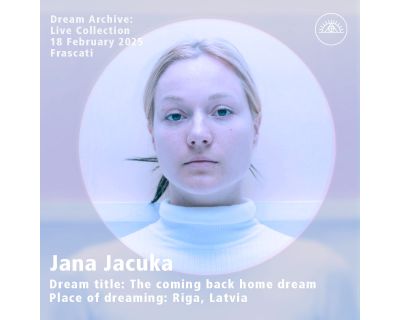
Dreamer: Jana Jacuka
Dream date: Recurring, several times during 2021- 2023
Dream title: The coming back home dream
Place of dreaming: Riga, Latvia

‘I go into my bedroom and realise there’s another door in it. I open it and suddenly there’s many more rooms.’

Wednesday February 19

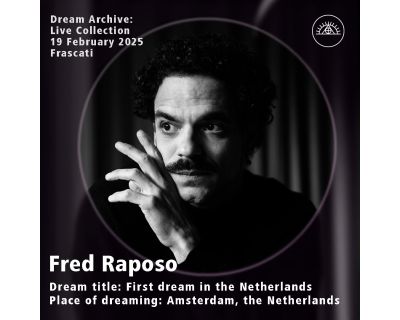
Dreamer: Fred Raposo
Dream date: Night of 25 to 26 August 2024
Dream title: First dream in the Netherlands
Place of dreaming: Amsterdam, the Netherlands

‘Her parents introduce me to all the guests with so much pride and honor that I start wondering: Am I just a guest?’

Friday February 20

Dreamer: Eva LOU
Dream date: 17 October 2024
Dream title: The full moon siege
Place of dreaming: Amsterdam, the Netherlands

‘Suddenly, several tall white men step into my room through the window, even though my room is on the second floor.’

Would you like to donate your dream to the LUNARIS dream archive?

More information here

More information and tickets

22-23 May 2025, Frascati, Amsterdam

Get the tickets HERE 

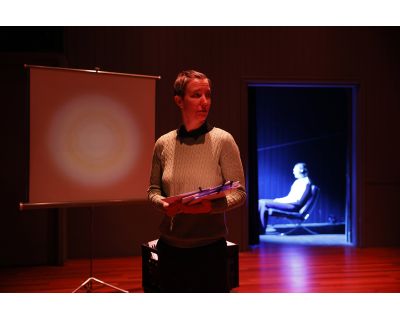
After the premiere at the SPRING Performing Arts Festival, Within Cells Interlinked, a new performance by Andrea Božić and Julia Willms in collaboration with the Premonitions Agency, is on further tour and back in Frascati, Amsterdam

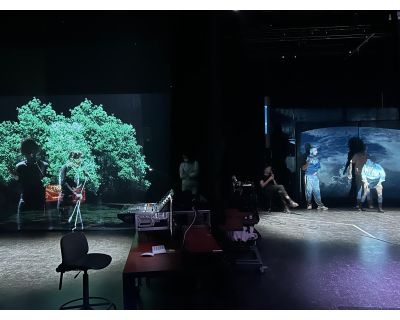
Within Cells Interlinked is a transmedia performance blending dreams, corporate surveillance, and gameplay to explore the intersection of imagination and reality.

What if dreams are more than just hyper-real 3D experiences? What if they are encoded messages—signals we can decode to shape our waking lives? And what if changing our dreams could transform reality itself?


Read more about Within Cells Interlinked HERE

Watch the trailer HERE

Within Cells Interlinked is part of the LUNARIS multiverse.

Read more about LUNARIS HERE


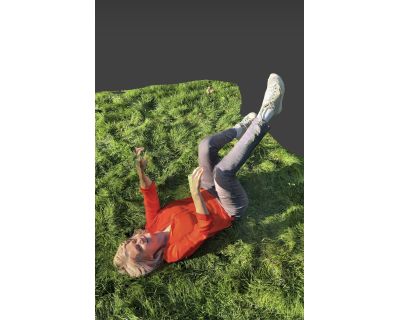
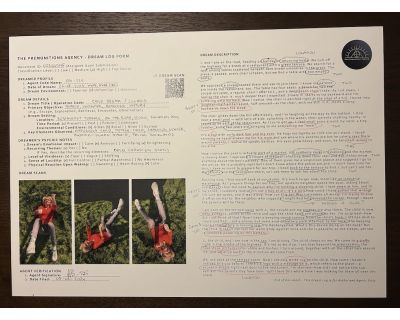
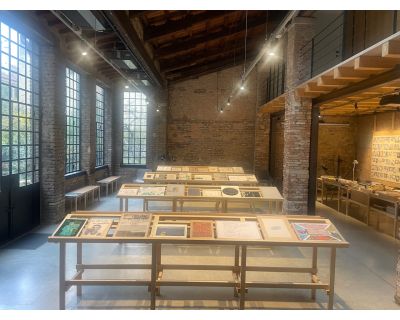
Andrea's new work The Premonitions Agency - Dream Log has been included in By the Means at Hand, Vlatka Horvat's project for the Croatian Pavilion at the 60th Venice Biennale

Exhibition: 20 April 2024 - 24 November 2024
Croatian Pavilion, Venice Biennale, Venice

Read more about it here

How To Exit a Reality: Cosmologies of Space, Attention and Spectatorship

A keynote lecture by Andrea Božić and Julia Willms | TILT

Artistic Research Day | Artistic Research and Imagination, Fontys Fine and Performing Arts, Tilburg

21 January 2023, 12:30-14:00 hrs

In the session Andrea Božić and Julia Willms | TILT will share some of the principles from their long term research under the umbrella name Spectra - Space Is an Organism, where they explore the relationship between attention and an embodied experience of space: how the (re)organisation of attention and space affects one’s sense of ‘reality’ and the modes of spectatorship emerging from it. How – when the logics of attention and space are altered – might a new ‘imaginal’ space appear in their overlap?

The session will focus on the overlaps of dream logic, escape room (gameplay) logic and deep-time cosmological logic behind their recent performance How To Exit a Reality (Attempt 1 of 19) and site-responsive audio-visual installation Looking-Glass House, both in collaboration with the moon.
The session will include practical exercises where the participants are invited to work with dream mapping and escape room principles to develop playful performative in-disciplinary or transdisiplinary setups.